Latest
Oct 27 · 42.22 pre-release: ladders and crowbar break-insOct 21 · The Indie Stone on Java mods: download responsiblySep 28 · Build 42.21 Stable: zombie duplication fixesAug 26 · Security fixes on every branchAug 17 · Servers now handle up to 254 playersJul 29 · Build 42 goes Stable

Farming & food

Build 42 made food a real system: crops have seasons, animals grow up, and the fridge stops working the day the power dies. This guide covers every way to eat, from the first can to a working homestead. Updated for Build 42.21, October 2026.

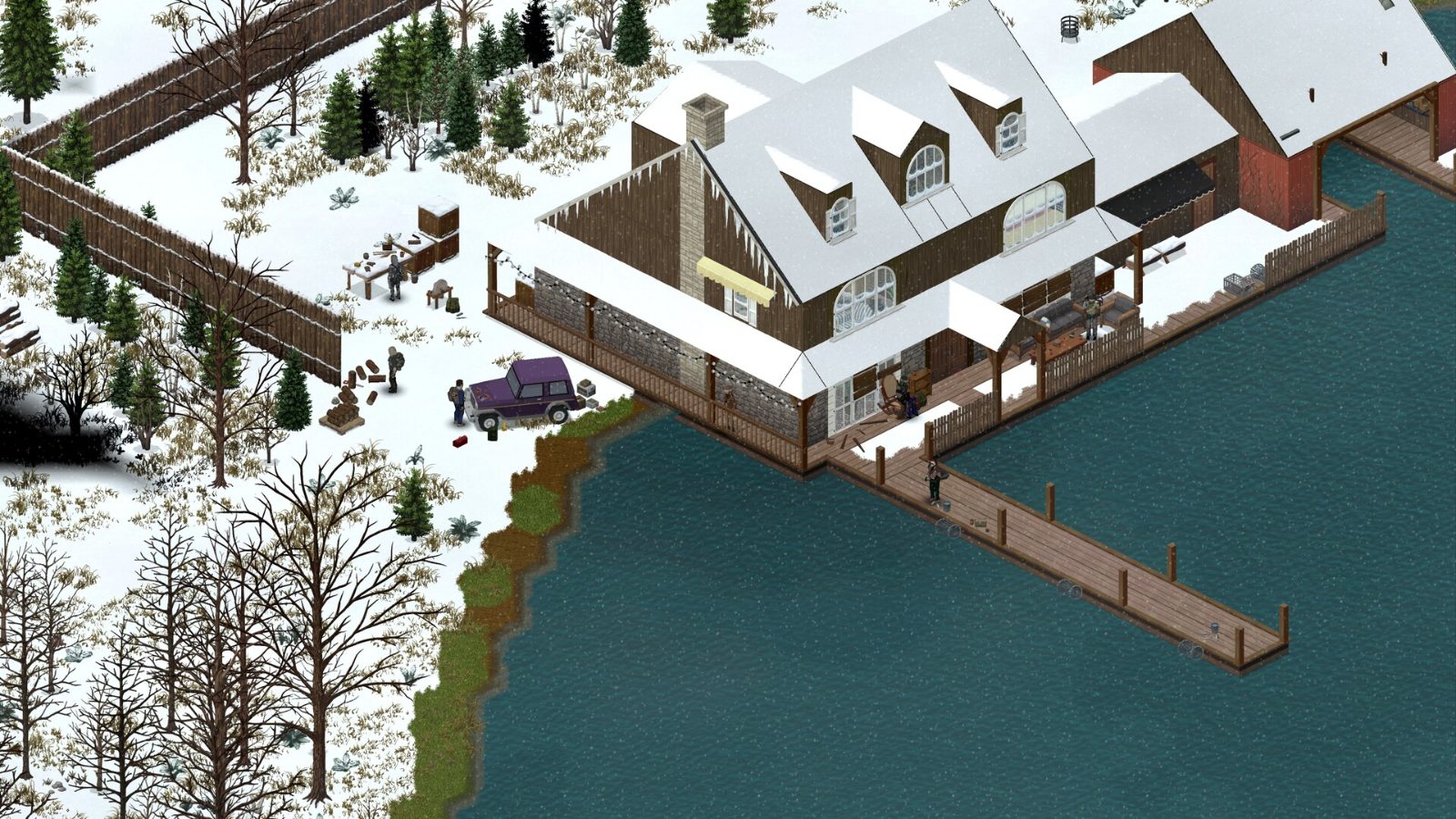
A large house on a snowy lakeshore
Winter: plan your food before it comes
01Step

The food ladder

  1. Week one: fridge and freezer food first, then cans and dry goods. Keep a can opener.
  2. Weeks two to four: fish, forage and trap. A fishing rod on a river is food that never runs out.
  3. Month one: plant your first crops. In Build 42 the month matters, so check the season before you sow.
  4. Long term: animals for eggs, milk and meat, a drying rack and preserved food for winter.
02Step

Crops and seasons

Every crop has a sow window. Plant in a good month for a healthy plant and sometimes a bonus yield; plant outside the window and the crop is doomed before it sprouts. Examples reported by players on Build 42: cabbage from February to July, potatoes February to April, corn March to May, garlic July to September, hops and hemp August to October. In-game, the seed packet and the farming panel tell you the right months.

  • Growth takes real time: radishes in about a month, most vegetables around two, potatoes and corn around three, and slow crops like tobacco, garlic and hops half a year or more.
  • Ground level only by default. Roof farms need a sandbox option switched on.
  • Tools: a trowel or shovel to dig, seeds, and a watering can or bucket.
  • Grains such as wheat can be harvested with a scythe, which also clears grass for animals.

Plant something slow early. Garlic and tobacco sown in late summer are ready the following spring, when you need them most.
03Step

Water, weeds and disease

  • Water: seedlings are thirstiest. Let a plot dry out early and it slows down and gets sick.
  • Weeds steal water and invite disease. Pull them when you see them.
  • Compost from a composter (Carpentry 3 for a shoddy one, 6 for a proper one) gives each plant one boost. It is help, not a cure-all.
  • Fertilizer: one dose speeds a crop up a lot. A second dose hurts it, and more than two can kill it.
  • Diseases and cures: mildew wants milk in a garden spray; aphids want water with a little rubbing alcohol; flies want water with tobacco. Cure recipes come from Farming 6, the Farmer occupation, or magazines.

Soap does not work on aphids, whatever Build 41 taught you.

04Step

Animals

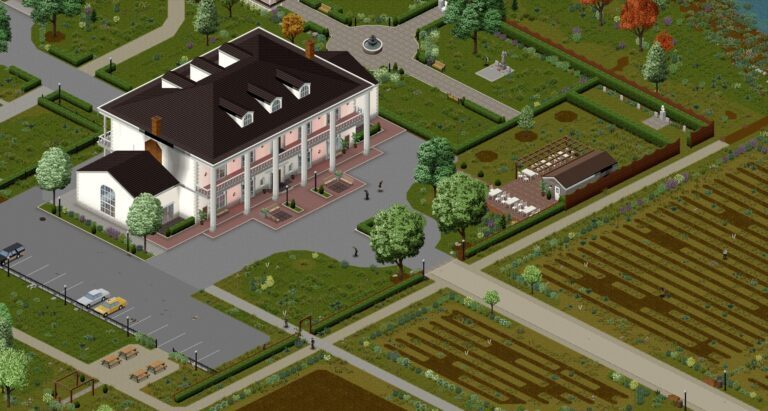
A mansion surrounded by farmland
Farmland and orchards around a country house · Official image, The Indie Stone

Build 42 added livestock and wildlife: chickens, cows, sheep, pigs, deer, rabbits, rats, turkeys and raccoons. Farm animals give meat, leather, eggs, milk and manure.

  • Chickens and turkeys live in a hutch (Carpentry 4) that holds up to 20 birds. They take about four months to mature.
  • Cows and sheep take about six months. Cows give milk, sheep give wool.
  • Pigs have no hutch: fence them outdoors.
  • Rabbits are wild. Trap or hunt them.
  • Animals need food, water and space, and they get stressed by zombies, noise and (for some) rain. Since 42.17 they calm down more when you pet them.
  • Butchering: a butcher hook hangs large animals and gives more meat since 42.20. The Rancher occupation starts with Animal Care and Butchering.
05Step

Hunting, fishing and foraging

  • Fishing: a rod or a spear at any river or lake. The west of the map has the Ohio river, Fallas Lake and plenty of ponds.
  • Hunting: wild animals leave paw prints and droppings you can track. Deer and rabbits are the usual targets; some advanced recipes need their hides and bones.
  • Trapping: small traps on the edge of woods catch rabbits and birds while you do other things.
  • Foraging: search zones in woods and fields for berries, mushrooms, herbs and firewood. Some mushrooms and berries are poisonous: learn them with the Herbalist magazine or the right occupation.
06Step

Keeping food

  • Before the power cut: freeze meat and eat perishables first.
  • After: a generator can run a fridge, but it is loud and drinks fuel.
  • Preserve: drying racks for meat and crops, jars and canning for vegetables, smoking over a fire.
  • Cook: a campfire, barbecue or fireplace replaces the oven. Raw meat makes you sick.
+Ref

Animals: what each one gives you

Chickens

Eggs and meat. Need feed and a coop.

Cows

Milk and leather. Need pasture space.

Sheep

Wool and meat. Need shearing and grazing.

Pigs

Meat and hide. Omnivores and described as easier to feed.

Deer

Huntable for meat and hide.

Rabbits

Small game that you can trap.

Rats

A pest, but trappable.

Animals use dedicated zones, feed and products, and are aimed mainly at rural settlements.

+Ref

Managing animals

  • Feeding. Keep a feeding schedule and watch nutrition.
  • Health. Monitor health and treat sick animals.
  • Breeding. Pair animals to grow your stock.
  • Housing. Build pens and shelters before you bring animals home.
  • Harvesting. Collect milk, eggs and wool, and butcher animals for meat and hides.
+Ref

Professions that help farmers

Farmer

Farming 4, Husbandry 1, Strength 1.

Rancher

Husbandry 4, Butchering 3, Fitness 1.

Chef

Butchering 2, plus cooking know-how.

Fishing Guide

Fishing 3, Plant Scavenging 1, Butchering 1.

Park Ranger

Trapping 1, Flint Knapping 1.

+Ref

Seasons and planting

  • Crops follow seasonal sow, best and bad months. Planting any time you like is not supported.
  • In Outbreak, farming speed and yield are 1.5x. In Rising, farming supplies are 2.0x in loot.
  • Plan your plots before the first cold snap, and keep stored food as a backup.
+Ref

Crop table: days and sow months

Days are approximate at default farming speed. Disease, missed watering and fertiliser all shift the real timing. No crop lists December or January as a sow month.

Radishes

36 days. Sow Feb to Aug. Best Mar and Jul. Risk Aug. The fastest common vegetable.

Lettuce

73 days. Sow Feb to Apr and Jul to Sep. Best Mar and Jul. Risk Sep. Thirstier than radishes.

Broccoli, cabbage, kale, spinach

73 days. Wide spring to summer windows, with late-summer risk months. Kale and cabbage are cold-hardy.

Potatoes

108 days. Sow Feb to Apr. Best Mar. Risk Apr. The spring staple.

Tomato

108 days. Sow Apr to Jun. Best May. Risk Jun. Thirsty.

Bell pepper

73 days. Sow Apr to Jun. Best May. Risk Jun. Thirsty.

Carrots

108 days. Sow Feb to Jul. Best Feb and Jun. Risk Jul. Long sow window.

Barley, rye, wheat, hemp, hops, flax

108 days. Sow Aug to Oct. Best Sep. Risk Oct. The autumn cereals and fibre crops.

Tobacco

About 217 days. Sow Mar to Jul. Best Mar. Risk Jul. The longest listed crop.

+Ref

Watering in detail

  • Each water action adds 10 to the plot's water level, capped at 100, so a dry plot may need several pours.
  • Each growth stage has its own water threshold, and later stages need more than the first.
  • Missing the threshold delays growth and lowers health.
  • Weeds double water drain.
  • Outdoor plots refill from rain. Sun and flies speed up drying.
+Ref

Compost and fertiliser

Compost, first use per stage

About +10 health (not if weeds block it), shortens the current wait by about 40 hours (about 20 with weeds), and may give early bonus yield. Usable again after the next stage.

Chemical fertiliser, dose 1

Same benefit as compost.

Chemical fertiliser, dose 2

-25 health and no benefit.

Chemical fertiliser, dose 3 or more

Marks the plant cursed, -25 health, and can kill it.

Compost helps but is not required for any harvest. Weeds block all fertiliser benefits. The chemical counter drops by one each time a stage advances.

+Ref

Plant health, cursed plants and yield

  • Starting health is not fixed. With seasons on and a best sow month it is about 57 to 64 plus skill; cursed at planting is about 37 to 44 plus skill. Otherwise a moon-based roll gives roughly 47 to 53, 57 to 64 on a full moon, or 37 to 44 on a descending moon.
  • Health changes every few hours from weather, temperature, water, weeds, light, winter hardiness and location (outdoors, a named greenhouse room, or a normal indoor room).
  • Cursed multiplies health loss and disease pressure. It comes from planting outside sow months, growing through a bad month (unless hardy), or fertiliser abuse.
  • Yield scales with health relative to 50. Aphids and slugs cut it, skill rolls add to it, and bonus yield is blocked on a cursed plant.
  • Seeds come back at roughly half a seed per vegetable, with a minimum of one when the plant produces seed.

Sandbox settings

Plant Growing Seasons

Turns the sow-month and bad-month curse checks on or off.

Farming speed

Multiplies how fast stages complete.

Farming amount

Multiplies the harvest count.

Kill plants outside greenhouse

Slowly kills indoor plantings that are not in a greenhouse room.

+Ref

Fishing in detail

An autumn forest by a river
Rivers and lakes: look for ripples · Official image, The Indie Stone
Factory rod

Catch multiplier 1.0.

Crafted rod

Multiplier 0.8. Needs a sharp knife or cleaver, a wooden stick, 2 line and 1 hook. Learned at Fishing 4 or Carving 4.

Fix a rod

Broken rod + fishing line + hook. Fishing 4.

Fishing net

10 twine + 5 wire. Fishing 6. A broken net gives back 1 wire at Fishing 7.

Chum

From a sandbag or sandy ground. Fishing 5. Fish guts work as chum too.

Line and hooks

Twine

Weakest line (wear 0.3).

Fishing line

Wear 0.2.

Premium line

Wear 0.1. Best for big fish.

Paperclip hook

Bite 0.8.

Nail hook

Bite 1.0.

Fishing, forged or bone hook

Bite 1.2.

Bait

  • Artificial lures: jig and minnow only. They are rarely lost.
  • Natural bait: worms, maggots, crickets, grasshoppers, cockroaches, leeches, bait fish, tadpoles, meat scraps, cheese, bread and open canned corn.
  • Worms stay fresh about 4 days and rot by day 8.
  • Each species has its own bait preferences.

When and where

Time

x1.2 bites from 4 to 6 am and 6 to 8 pm.

Temperature

Full rate in mild weather; x0.75 at 0 to 15 or 30 to 40 °C; x0.5 below 0 or above 40; x0.25 below -10.

Weather

Rain x1.2. Heavy fog or wind x0.8.

Schools

Look for ripples. Empty water x0.1, small school x0.5, normal x1.0, big school x1.5. Schools refresh daily.

Fishing skill

Level 0

Mostly small fish (95%) and lots of trash.

Level 2

First chance of a big fish.

Level 4

10% big. Rod recipes learned.

Level 6

20% big. Net recipe.

Level 8

40% big, and rare legendary catches.

Level 10

50% big. The heaviest species, up to about 45 kg.

  • Fishing close to shore gives smaller fish.
  • Passive nets catch bait fish, frogs, mussels, crayfish, tadpoles and junk. Baited nets take only chum and can catch catfish.
  • Slice a fish into 2 fillets with a sharp knife (Butchering XP).
  • Whole fish stay fresh about 4 days, fillets about 2. Cook before eating.
  • In multiplayer, schools are shared, and you cannot fast-forward time while fishing.
+Ref

Hunting and tracking

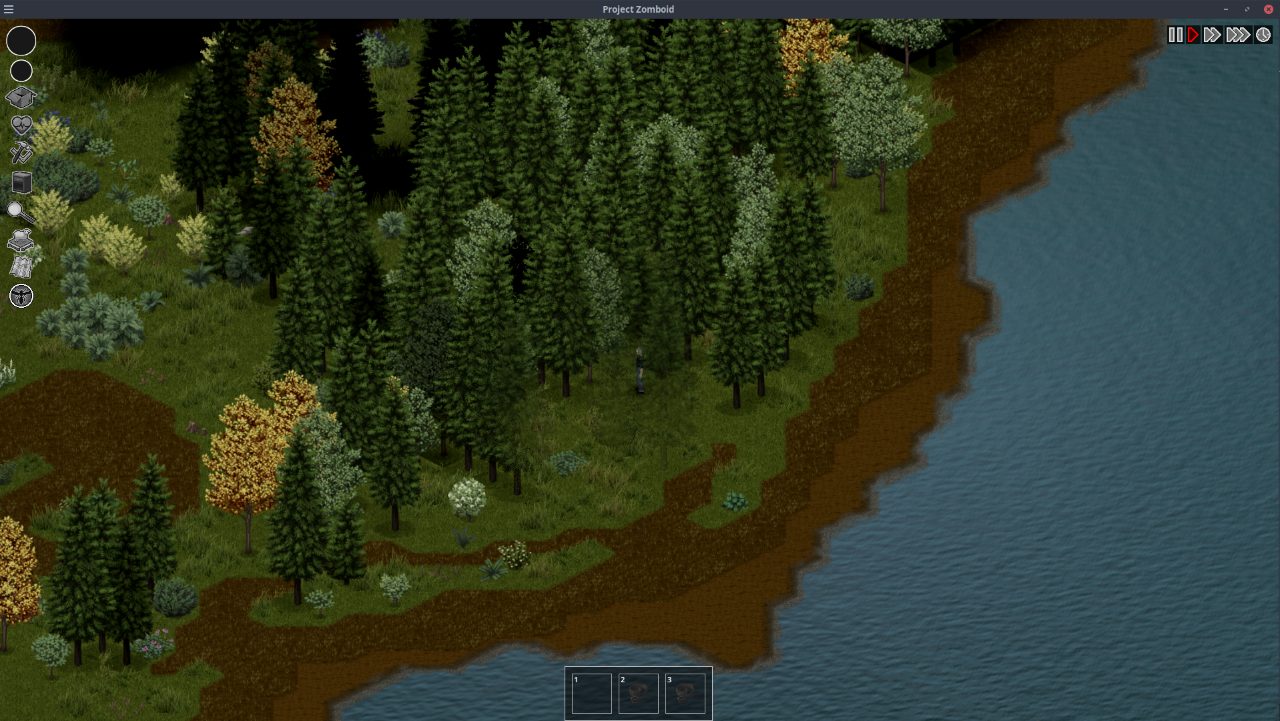
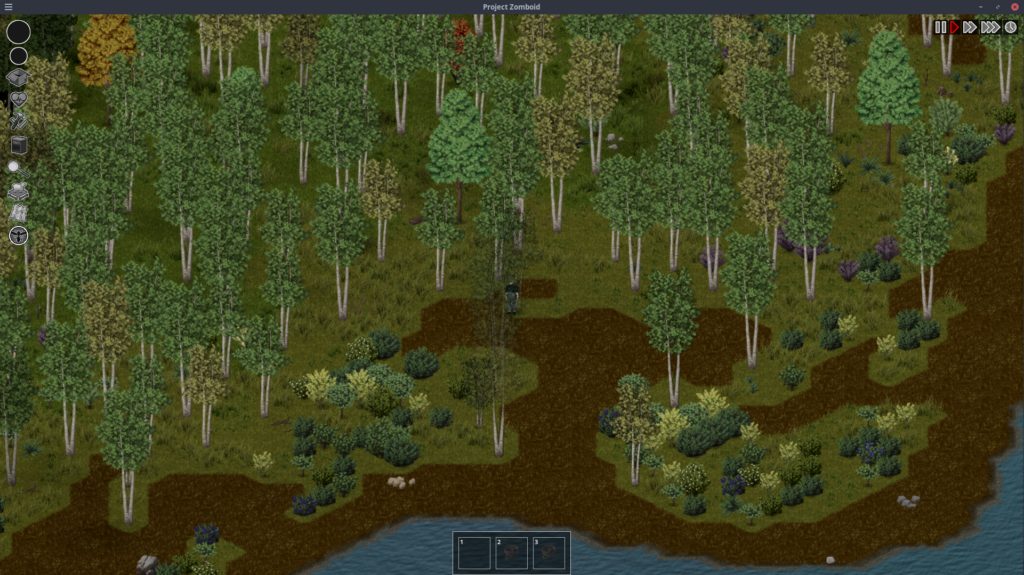
A forested riverbank
Deer and rabbits leave tracks along forest edges · Official image, The Indie Stone
Footprints, droppings

Visible at Tracking 0. Footprints show direction.

Grazed and flattened herbs

Tracking 1.

Broken twigs, fur

Tracking 2.

Identify a rabbit

Tracking 1.

Identify a deer

Tracking 4. Below that you only see "large animal".

  • Deer travel in groups of about 2 to 5 females, plus males and fawns.
  • Rabbits travel in groups of about 3 to 8 females. Breeds include swamp, Appalachian and cottontail.
  • Use Search Mode to spot clues, follow the freshest signs, stalk quietly, then butcher for meat and leather.
  • Hunter starts with +1 Tracking.
+Ref

Trapping

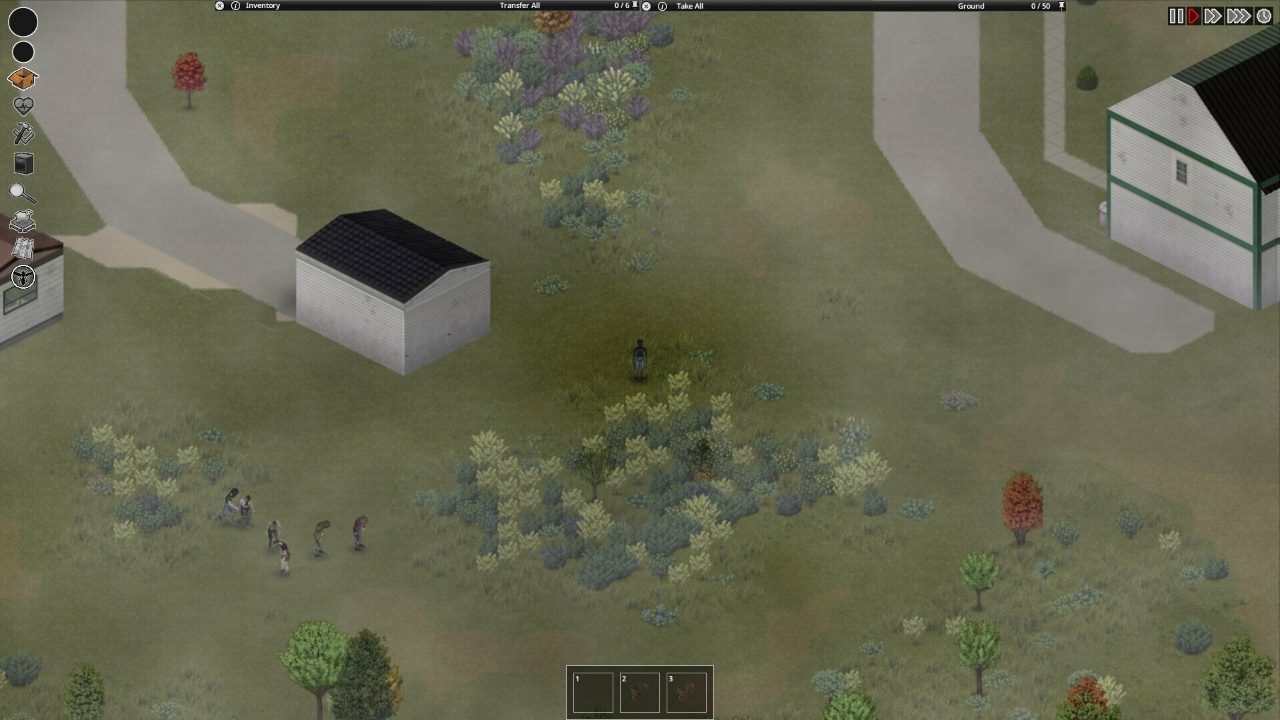
An overgrown field by a shed
Fields near forest edges for traps · Official image, The Indie Stone

Traps are checked every in-game hour, but only while you are far enough away that the area is unloaded. Standing nearby stops catches.

Mouse trap

Mice and rats (loot only).

Stick trap

Small birds.

Snare

Rabbits, squirrels, raccoons. Trapping 1.

Crate trap

Rabbits, squirrels, raccoons.

Box trap

Rabbits, squirrels, raccoons. Carpentry 1, Trapping 2.

Cage trap

The best for rabbits, squirrels and raccoons. Trapping 3.

Bait that works

Mice and rats

Cheese is best, then processed cheese, peanut butter or bacon bits.

Birds

Bread, insects or worms, then cereal and corn.

Rabbits and raccoons

Carrots, then lettuce, bell pepper or cabbage.

Squirrels

Peanut butter or cereal, then peanuts, popcorn, fruit, corn or lettuce.

  • Rabbits, squirrels and raccoons are active from 7 pm to 5 am; birds, mice and rats all day.
  • Set small-game traps in deep forest. Towns barely work for them; farms and trailer parks are best for mice and rats.
  • Rabbits, mice, rats and raccoons can be caught alive.
  • Every trap needs fresh bait. Bait can vanish and traps can break.
  • Higher Trapping raises your odds. Park Ranger and Hiker start with +1.
+Wild

Foraging

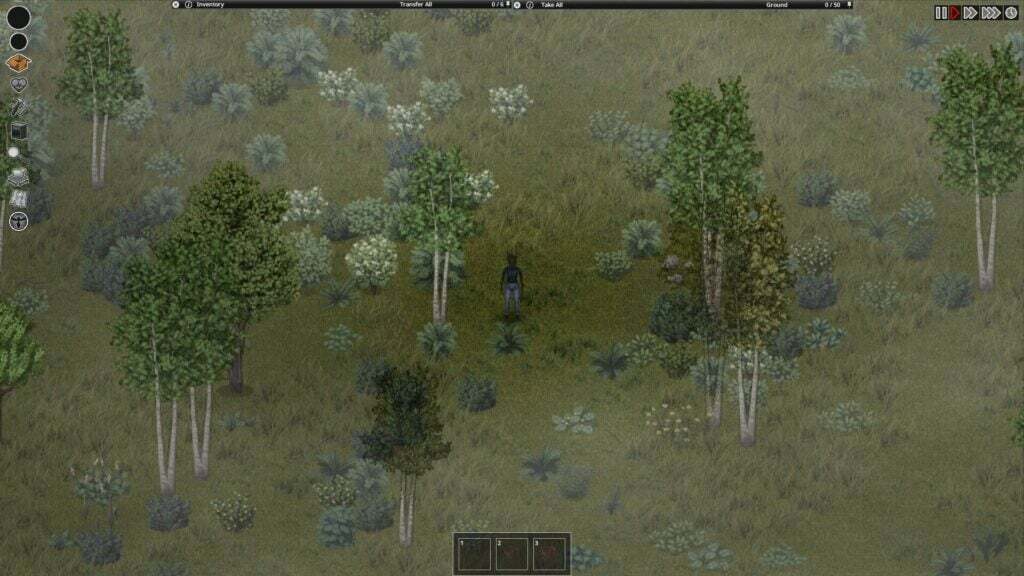
Grassland and birch trees
Open grassland: berries, herbs and insects · Official image, The Indie Stone

Open Investigate Area (the spyglass icon) and turn on Search Mode. Icons appear on outdoor ground in view.

Search radius

3 tiles at Foraging 0, rising to 10 at level 10. Aiming gives x1.33, sneaking x1.1. Hard cap 15.

Trait bonuses

Park Ranger +2, Farmer +1.5, Eagle Eyed +1, Outdoorsman +0.4, Herbalist +0.2.

Penalties

Panic, stress, tiredness, running, rain, fog, snow, darkness and anything over your eyes.

What each level unlocks

Level 0

Tracks, firewood, stones, insects, most berries, mushrooms, Lemon Grass.

Level 2

Broccoli, cabbage, carrot, potato, tomato, leek, radish.

Level 3

Berries and mushrooms as a focus; onions, slugs, snails.

Level 4

Insects, wild plants, herbs, trash; cherries, rosehips.

Level 5

Animals and crops; oranges, dead mice and rats.

Level 6

Medicinal plants; lemons, limes, peppers.

Level 7

Fruits and vegetables; apples, grapes, frogs.

Level 8

Forest rarities, medical items, ammo, bones; peaches, pears, corn, wild eggs.

Level 10

Pineapple, watermelon, dead rabbits.

  • Most plants and insects appear from March to November. Winter, beauty and holly berries appear in winter.
  • Rain helps worms, insects and mushrooms. Night helps mushrooms. Snow hurts most plants.
  • Mushrooms are best in organic forest, berries in deep forest, fruit and vegetables on farmland.
  • Forests hold the most finds; towns and roads the fewest.
  • Berries and mushrooms can be poisonous even when they look the same. The Herbalist trait or magazine shows which.
  • Medicinal herbs (Plantain, Comfrey, Wild Garlic, Common Mallow, Black Sage, Ginseng) need Herbalist recipes. Lemon Grass does not.
+Avoid

Common farming mistakes

  1. Planting out of season. Check the season before you buy or find seeds.
  2. Forgetting to water. Dry crops stall or die.
  3. Harvesting too early or too late.
  4. Planting right next to your door, where zombies can trample it. Fence and defend your plots.
  5. Putting all your food into one crop. Mix them, and keep stored food as backup.
  6. Ignoring storage. Fresh produce rots, so can, dry or freeze what you do not eat.
07Q&A

Quick answers

Why do my crops keep dying?

Usually the month. In Build 42 each crop has a sow window; plant outside it and the crop is doomed. After that: water, weeds and too much fertilizer.

What should I plant first?

Whatever is in season when you find seeds. Cabbage has a long window, and potatoes and corn feed a lot of people per plot.

Can I farm on a roof?

Not by default. There is a sandbox option for it, and it can cost performance.