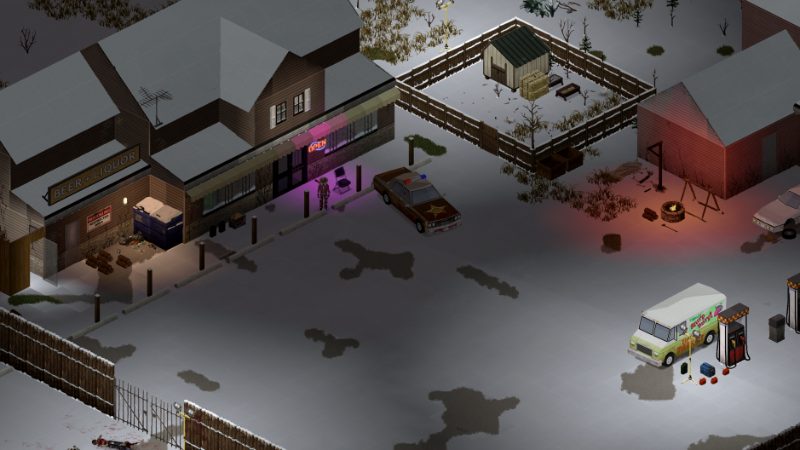
Insulation is added up per region, torso, legs, feet, hands and head, and each region counts separately. That is why two thin layers often beat one thick one, and why a character in a padded jacket but thin shoes still gets cold feet. The hidden enemy is water: wet cloth loses most of its insulation, and wetness, cold and wind each push body temperature down on their own.
Wet
The Wet moodle shows at 15% body wetness, worsens at 40%, risks a cold from 70% and nearly guarantees one at 90%. Rain, swimming, sweat and washing all add to it. An umbrella in a hand slot slows the gain and stops the moodle at its second level. Dry off indoors, by a fire, or with a dish or bath towel; wet clothes dry on their own in time, faster near heat, and a clothing dryer (20 slots, electricity only) does it with no water connection.
Cold
Hypothermia starts below 36.5 °C with no effect, then below 35 °C attack speed drops by about a third and you slow down, below 30 °C two-thirds, and below 25 °C you lose health steadily. Since 42.20 it no longer kills unreasonably fast, but it still ruins a fight. Causes are thin clothing, staying wet, wind chill and, oddly, a car's air conditioning. Hunger, tiredness and low fitness all cut cold resistance, so eat before a winter trip. Campfires, vehicle heaters and simply being indoors warm you back up; see base building for stoves.
Heat
The opposite problem is real too. Firefighter gear at 0.85 insulation is a July liability: hyperthermia above 37.5 °C raises thirst and saps you. Strip heavy layers for daytime work in summer and put them back on for a planned clear. Outdoorsman and Resilient both reduce the chance of catching a cold from wet and chill, and the sickness stages are on health.