Latest
Oct 27 · 42.22 pre-release: ladders and crowbar break-insOct 23 · First-person mods are not officially supportedOct 21 · The Indie Stone on Java mods: download responsiblySep 28 · Build 42.21 Stable: zombie duplication fixesAug 26 · Security fixes on every branchAug 17 · Servers now handle up to 254 playersJul 29 · Build 42 goes Stable

Cooking & nutrition

Food in Project Zomboid is about more than hunger: it keeps your weight up, your mood steady and your character alive through the winter. How evolved recipes work, what spoils and when, how to can for the cold months, and the weight bands that change everything. Updated for Build 42.21, November 2026.

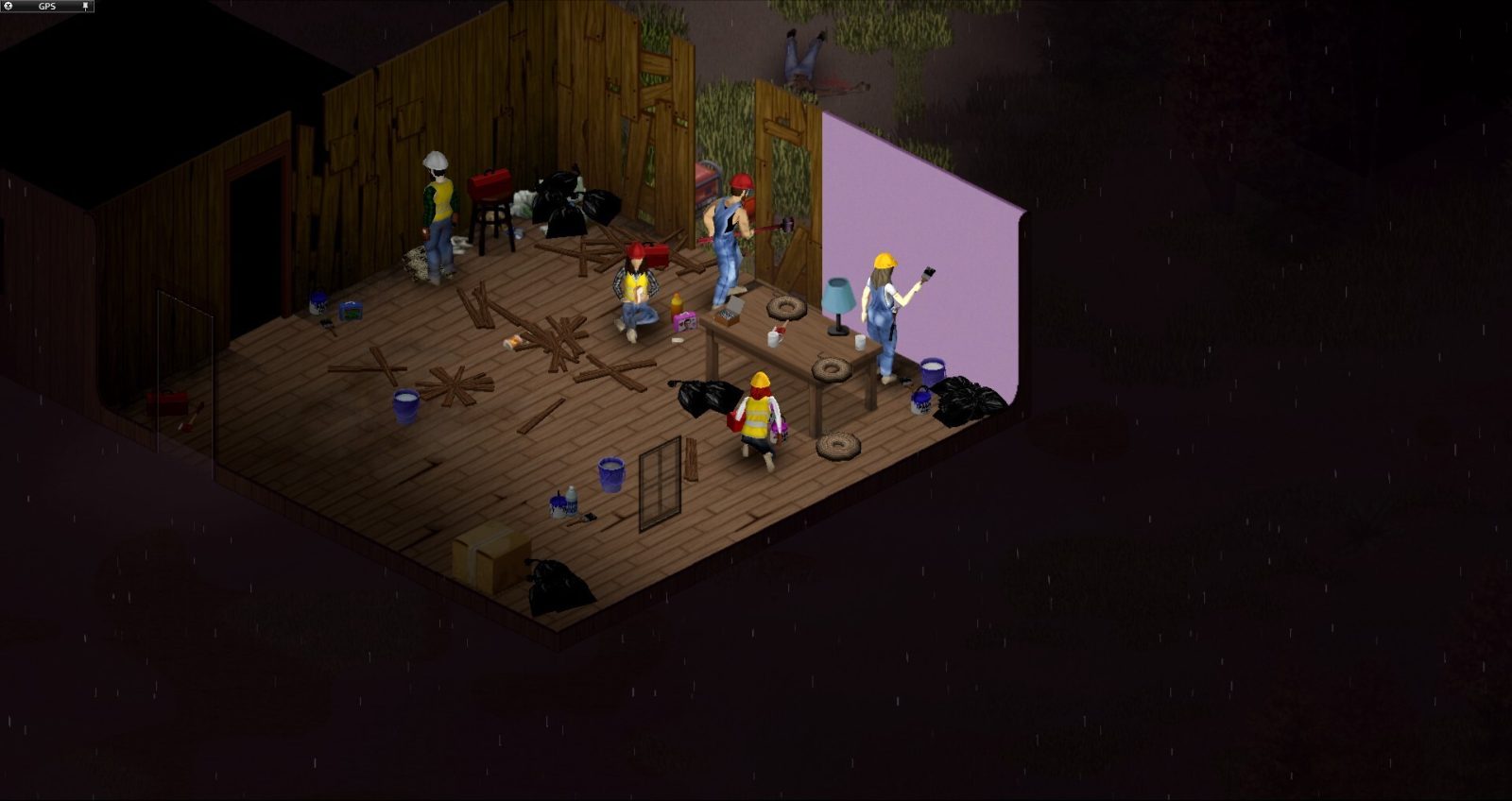
A kitchen in a dark house
A good stew is worth a week of tinned beans
01Part

Evolved recipes

Most real meals are evolved recipes: start with a base, then add ingredients one at a time. Each new ingredient makes the dish more filling and cuts boredom and unhappiness; repeating the same ingredient a third time cancels the bonus and a fourth makes it worse. Spices help more than anything.

DishBaseIngredientsCooked?
Soup or stewPot or bucket of waterUp to 6Yes
Stir fryFrying pan or griddleUp to 4Yes
Roast vegetablesRoasting panUp to 6Yes
SandwichBread slices or baguetteUp to 4Toasted: about 5 minutes, burns at 20
SaladBowlUp to 6No
Rice or pastaPot or saucepan with water4 to 5Yes
Hot drinkMug or cupUp to 3Yes
BurgerBunUp to 4No
Taco or burritoShell or tortillaUp to 5No

Hunger, calories and spoil times for 92 foods: food list.

Pies, cakes, pizza and muffins also exist. Bread dough, baguettes, cake batter and pie dough are learned at Cooking 7, or from the cooking magazines on skills.

02Part

Rotten food and Cooking level

Cooking 1 to 6

Rotten ingredients are refused.

Cooking 7 to 8

Rotten ingredients go in, at about 5% of their value.

Cooking 9 to 10

About 10%. Burnt food is always refused.

Food poisoning

Eating rotten food carries a high chance of sickness; raw steak, fish and eggs can too. Cooking removes the risk. Iron Gut and lemongrass help.

03Part

Spoilage, fridges and freezers

Fridge

Food lasts about five times longer.

Freezer

Fully frozen food stops decaying. A fish fillet lasts 2 days on the counter, 10 in the fridge, indefinitely frozen.

Power cuts (42.21)

Fridges and freezers now warm up gradually on the day the power goes, instead of spoiling everything at once. Food in bags inside them counts as refrigerated.

Fresh meat

Butchered meat starts losing value about 12 hours after the animal dies.

Tins

Canned food lasts months, not forever. Sources disagree on the exact window, so eat the oldest first.

Rotten food stays

By default rotten food never disappears. Clear your fridge or it will smell.

04Part

Canning for winter

Build 42 canning: a jar and lid (both used up), a knife, the vegetables, 2 vinegar, 1 salt and half a unit of water. Cook the jar for about 60 minutes; it burns at around 120. Learned at Cooking 8 or from American Homesteading.

VegetablePieces per jar
Radish15
Bell pepper6
Broccoli5
Carrots5
Leek4
Tomato4
Eggplant3
Potato3
Cabbage2
Fish roe1

No meat or fruit. Jars are reusable once emptied, lids are not; find a stock of lids before autumn.

05Part

Weight and calories

Your weight drifts with what you eat and how hard you work. The bands (from older game data; Build 42 may have shifted them slightly):

Weight (kg)StateEffect
100+ObeseSlower, less endurance
85–99OverweightLess endurance
76–84NormalNo penalty
66–75UnderweightWeaker
51–65Very underweightMuch weaker
50 or lessEmaciatedHealth damage below 35

Any weight state other than normal caps Fitness XP at level 6. Eat fat and calories in winter; cut back in summer. Fast and Slow Metabolism traits push you one way from the start. Nutritionist shows the numbers on every food.

06Part

Heat sources compared: stove, microwave, campfire, BBQ and antique oven

Every heat source cooks the same recipes, but they differ in what powers them, how safely they fail and how easily they burn your dinner. The electric ones warn you with a bell before food burns; the fuel-burning ones do not, so set a timer in your head.

Oven and stove

Needs grid power or a generator. Has a burn alarm, so it is the safest place to leave a pot. Found in nearly every kitchen.

Microwave

Needs power. Fastest of the lot and rarely burns food, but metal cookware must never go in. Light enough to carry to a new base.

Campfire

No power. In 42.20 and later it is built from 3 stones, then fuelled with wood or paper through Add Fuel. Outdoors only and it will spread to nearby objects, zombies and you.

Charcoal BBQ

No power. Burns charcoal, wood, paper or fabric and keeps smouldering a little after you turn it off. Light it with paper or petrol, not ripped sheets.

Propane BBQ

Needs a propane tank installed, found in sheds, workshops and other barbecues. Remove the tank before you try to pick the BBQ up.

Antique oven and fireplace

Burn wood or paper, give warmth and light, and do not spread fire the way a campfire does. Antique ovens are rare, mostly in log cabins and warehouses, and cannot be moved without tools and Carpentry.

Cooking times are short and burn windows are long: a sandwich takes about 5 minutes to cook and about 20 to burn, a bowl of oatmeal about 5 and 30. Burnt food is refused as an ingredient at any Cooking level, so pull the pot as soon as the label says cooked.

Our pick: a charcoal BBQ dragged into the base is the best early heat source. It runs on foraged twigs and junk mail, needs no power, and unlike a campfire it will not take the house with it.

07Part

Boiling water and tainted water

Water taken from rivers, lakes and rain collectors is tainted and carries a chance of sickness every time you drink it or cook with it. The container shows a skull icon while it is unsafe. Heat it on any working heat source until the icon disappears, and remember that one unit of water takes about 10 points off thirst.

Which containers can be boiled

  • Metal cookware for an oven, stove, campfire or BBQ: cooking pot (about 1.5 L), saucepan, kettle, roasting pan and a plain bowl.
  • Microwave only: water bottles, pop bottles, plastic cups, microwave-marked mugs and teacups, empty jars and watering cans. The tooltip says contents can only be purified in a microwave. Never put metal in there.
  • Not boilable at all: a bucket or a full gardening spray can. Decant into a pot first.

Water purification tablets purify a container without heat through the Purify Water craft. They are scarce outdoor-shop loot, so save them for travel. Later patch notes also added many more fluid containers that can be purified in the right oven, so if a container refuses in your build, check the branch you are on.

If you do drink bad water, lemongrass from foraging treats the sickness, and the health page covers the moodles. Cold or flu symptoms a day after a river drink are the usual sign.

Our view: keep one cooking pot permanently on the stove as a water station. Fill it from the rain barrel, boil, pour into bottles, repeat. Purified water does not re-taint in storage.

08Part

The Cooking XP loop and what each level buys you

Cooking XP comes from three actions: adding an ingredient to an evolved recipe, finishing a cookable item on a heat source, and crafting a cooking recipe such as dough or a jar. A bowl of oatmeal or cereal gives about 3 XP, so a stack of oats and a water source is a quiet early grind. Soups and stews with six ingredients pay out more per pot because every ingredient added counts.

What the levels change

  • The share of each ingredient used falls from 100% at level 0 to 70% at level 10, so the same larder feeds more meals.
  • Nutrition per ingredient rises with level, up to about 117% at 10.
  • Each level trims the time to add an ingredient.
  • Level 7 unlocks dough, batter and rotten-ingredient use; level 8 unlocks canning (see above).

Boosts

Chef starts at Cooking 3, Burger Flipper at 2, and the Keen Cook trait adds levels and recipe knowledge. The five Cooking skill books multiply XP by 3, 5, 8, 12 and 16 for levels 1 to 2, 3 to 4, 5 to 6, 7 to 8 and 9 to 10. On default sandbox settings the cooking TV shows stop helping at around level 3.

Our loop for the first fortnight: read the book for your current bracket, cook every raw item in the fridge before it turns, then run a pot of soup on the stove with whatever vegetables are closest to rotting. Burnt pots are the only real cost, so stay within earshot of the bell.

09Part

Quick answers

How do I cook in Project Zomboid?

Take a base such as a pot of water, a frying pan or bread, right-click it with ingredients to add them, then cook it on a stove, oven or campfire.

Can you eat rotten food?

You can, but it often causes food poisoning. Cooking 7 or higher lets you add rotten ingredients to recipes at reduced value.

How long does food last in a fridge?

About five times longer than at room temperature. Frozen food does not decay.

How do you can food in Build 42?

A jar and lid, vegetables, 2 vinegar, 1 salt and some water, cooked for about an hour. Learned at Cooking 8 or from American Homesteading.

What happens if my character gets too thin?

Underweight characters are weaker and get injured more easily; at 35 kg or less you start losing health.

Recipe bases, canning yields and spoilage from pzfans.com (42.20.4), pindrop.gg and build42guide.wiki; 42.21 fridge change from The Indie Stone’s patch notes; weight bands from older pzwiki data and may differ slightly in Build 42. Added November 2026: pzwiki.net Stove, Water, Cooking, Campfire; pzfans.com cooking and boiling-water guides (42.20.4).