Latest
Oct 27 · 42.22 pre-release: ladders and crowbar break-insOct 23 · First-person mods are not officially supportedOct 21 · The Indie Stone on Java mods: download responsiblySep 28 · Build 42.21 Stable: zombie duplication fixesAug 26 · Security fixes on every branchAug 17 · Servers now handle up to 254 playersJul 29 · Build 42 goes Stable

First aid quick reference for Project Zomboid

This is the short card for treating injuries in Build 42: which items you need, what to click, and how long each wound takes to heal. It also separates ordinary wound infection from the Knox zombie infection and gives the odds for scratches, lacerations and bites. Written for Build 42 (42.22), November 2026.

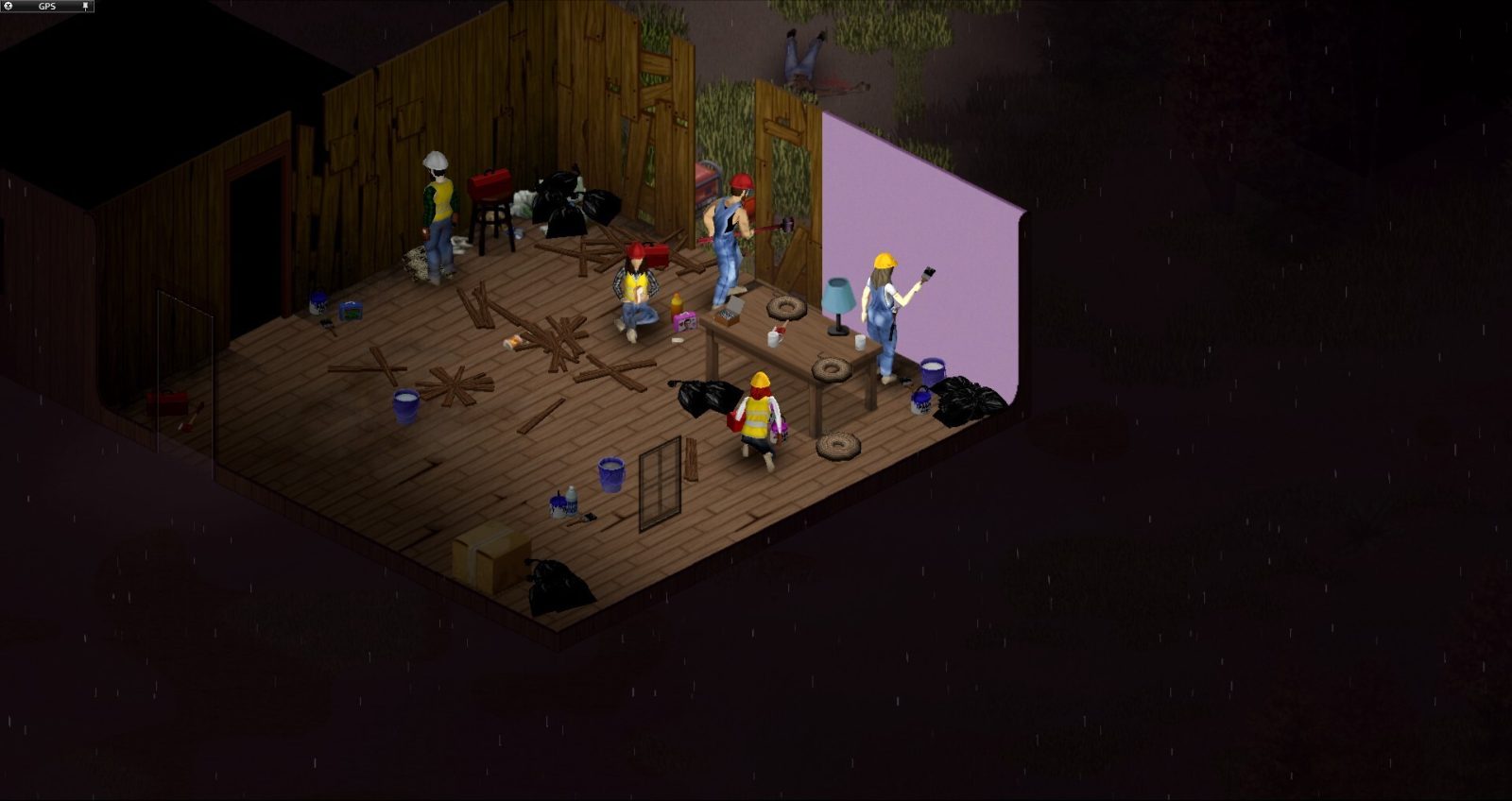
A dark room in Project Zomboid
Open the Health panel and right-click the injured body part to treat it.
01Part

What to treat first

Open the Health panel (the heart icon), then right-click the injured body part to see every treatment your inventory allows. This card is the short version for Build 42; the long explanation is on the health page.

  1. Get safe. Treatment stops if you move, so break line of sight first.
  2. Stop bleeding. Any bandage, even a dirty rag, beats bleeding out. Neck and head wounds bleed fastest, hands and feet slowest.
  3. Pull lodged glass or bullets. A wound with something in it cannot close.
  4. Stitch deep wounds, splint fractures.
  5. Disinfect and put on a clean or sterilized bandage. Change it when it turns dirty.
02Part

Every injury and what to do

Healing times are in-game time on the default 90-minute day at Normal injury severity, with a bandage on. They come from a reading of the Build 42 game code (one source), except the fracture figures, which two sources agree on. The Fast Healer and Slow Healer traits shorten or lengthen all of them.

InjuryItemsStepsHeals in
ScratchBandage, disinfectantDisinfect, bandage.4 to 9 hours. Left open it is about 15 times slower.
LacerationBandage, disinfectantDisinfect, bandage, change the bandage when dirty.19 to 37 hours. Left open, about 50 times slower.
BiteBandage, disinfectantBandage to stop the bleeding and disinfect the wound. This treats the wound only, not the Knox infection.2 to 3 days for the wound itself.
Deep woundSuture needle, or needle and thread; bandageStitch, disinfect, bandage. Take the stitches out once the wound has closed.About 3 to 4 days with a bandage alone. Stitching closes it at once and leaves only a scratch after the stitches set.
Lodged glassTweezers, then stitching kit and bandageRemove glass, stitch, bandage.About 3 to 4 days bandaged, unstitched.
Lodged bulletTweezers, then stitching kit and bandageRemove bullet, stitch the deep wound it leaves, disinfect, bandage.About 3 to 4.5 days bandaged, unstitched.
BurnSeveral clean bandages, painkillersBandage. When the panel says the burn needs cleaning, clean it (this uses a fresh bandage and hurts) and re-bandage.About 2 to 4 days. Left open, about 20 times slower.
FractureSplintSplint the limb, then wait. Head and torso breaks cannot be splinted.39 to 61 days with no splint; 8 to 12 days splinted at First Aid 0; about 1 day at First Aid 10.
BleedingAny bandageBandage the part. Bleeding is a state on top of a wound, not a wound of its own.Stops when bandaged or stitched.
Infected woundDisinfectant or alcohol wipes, antibiotics, sterilized bandageDisinfect, re-bandage with a sterilized dressing, take antibiotics.Not documented.

Sources disagree on bullets: two say tweezers remove them, one says a suture needle does. Carry both. Glass wounds mostly come from broken windows, so clear the frame or wear thick clothing. Burns are covered on the fire page and gunshot wounds on the firearms page.

03Part

Wound infection versus the Knox infection

These are two unrelated things. A wound infection is ordinary and curable. It shows as "Infected" on a body part in the Health panel, comes mostly from dirty bandages, bare wounds and dirty or bloody clothing over the wound, and is fixed with disinfectant, alcohol wipes, antibiotics or a wild garlic poultice. The Knox infection is the zombie virus. Nothing in the Health panel shows it and nothing cures it. On default settings it kills in 2 to 3 days, starting with the Queasy moodle.

Only wounds dealt by zombies can carry Knox. The game rolls once, when the wound happens, so fast treatment does not change the result. Scratches from weapons, glass or fences never infect.

Zombie woundKnox chance (default)What it means
Scratch7%Treat it and carry on.
Laceration25%Treat it and watch for Queasy over the next day.
Bite100%Fatal unless the sandbox rules were changed.

These odds apply to the default Blood and Saliva transmission. Saliva Only makes bites the only infectious wound, and None turns the virus off; both are in the sandbox settings. Queasy can also come from bad food or tainted water, so a queasy spell after a scratch is not proof.

04Part

Bandages, sterilizing and disinfectants

Every dressing stops bleeding equally well. The difference is how long it stays clean, which also grows with First Aid level. A dirty bandage is the main cause of wound infection, so swap it as soon as the panel shows it dirty.

DressingPowerNotes
Bandage4Lasts longest.
Sterilized bandage4No new wound infection while it stays clean.
Ripped sheets, denim strips, leather strips2Rip from spare clothing; see tailoring.
Sterilized rag2Same protection as a sterilized bandage, shorter life.
Adhesive bandage1.5Short-lived.
Any dirty dressing0.5Emergency only. Wash it first if you can.

Sterilizing: combine a clean bandage or ripped sheet with rubbing alcohol or strong liquor such as vodka or whiskey. Hot water over a heat source also works through the medical recipes (one source). Dirty dressings wash clean with plain water, and since 42.21 in a washing machine (one source).

Disinfectants: bottle of disinfectant, alcohol wipes, cotton balls doused in alcohol, and bourbon or similar spirits. Wipes and doused cotton balls are rated strongest, bourbon weakest (one source).

05Part

Stitching, splints and poultices

Stitching. A suture needle is the better tool. A plain needle with thread does the same job but causes about twice the pain (one source). Stitching can itself start a wound infection: roughly 1 in 5 at First Aid 0, falling to 1 in 30 at level 10 (one source), so disinfect afterwards. Pulling stitches too early reopens the wound.

Splints. Craft one from a plank, tree branch or stick plus one cloth strip, or apply the same materials straight from the Health panel. Arms, hands, legs, feet, neck and groin can be splinted. The First Aid level of whoever applies it is locked in, so if a better medic turns up, remove the splint and have them reapply it. The materials come back.

Poultices. Each takes five of the herb and a mortar and pestle (one source), and the recipes have to be learned first. Herbs come from foraging.

  • Plantain: speeds scratches, lacerations and deep wounds.
  • Comfrey: speeds fractures and stacks with a splint. One dose is small, so it does not replace the splint.
  • Wild garlic: fights wound infection.

Sources disagree on whether a poultice can sit under a bandage, so test it before relying on it.

06Part

Pills and the First Aid skill

Painkillers lower pain only. They do not speed healing, but pain slows you and ruins sleep, so take them for fractures, burns and after surgery. Antibiotics fight wound infection only; the item text itself says they cannot prevent zombification. Vitamins treat nothing.

First Aid changes these things:

  • Bandages stay clean longer, from 100% at level 0 to 250% at level 10.
  • Splints work far better. The splint bonus rises in step with level, which is why a fracture takes over a week at level 0 and about a day at level 10.
  • Less pain from stitching, pulling glass or bullets, and cleaning burns.
  • Lower chance of infection from stitching.
  • Treatment actions finish a little faster.

It does not change the Knox odds. Opinion First Aid is slow to train because it only rises when you treat real injuries, so read the skill books early and consider a medical start from the occupations list if you play with a group. The other skills are compared on the skills page, and clinics and ambulances on the loot locations page are the best places to find suture needles and antibiotics.

07Part

Quick answers

Can you survive a zombie bite in Project Zomboid?

Not on default settings. A bite always carries the Knox infection, which kills in 2 to 3 in-game days and has no cure. It is only survivable if transmission or infection mortality was changed in the sandbox settings.

What are the odds of infection from a scratch or laceration?

On default Blood and Saliva transmission a zombie scratch has a 7% chance and a laceration a 25% chance. The roll happens when you are wounded, so disinfecting quickly does not change it.

Do antibiotics cure the zombie infection?

No. Antibiotics only treat the ordinary wound infection that shows as Infected in the Health panel. Nothing cures the Knox infection.

How long does a fracture take to heal?

Without a splint, about 39 to 61 in-game days. With a splint applied at First Aid 0 it is about 8 to 12 days, and at First Aid 10 about one day.

How do I treat a deep wound without a suture needle?

Use a plain needle and thread, which works but hurts more. With neither, keep a clean bandage on it and it will close slowly over a few days; without a bandage it never fully closes.

How do I sterilize bandages?

Combine a clean bandage or ripped sheet with rubbing alcohol or strong liquor such as vodka or whiskey. A sterilized dressing blocks new wound infection for as long as it stays clean.

Infection odds and bandage power are confirmed by more than one source. Most healing times and the stitching figures come from a single reading of the Build 42 game code and are marked as one source; fracture times are backed by two. Sources: Pindrop: B42 injuries and first aid · PZ Fans: First Aid guide · PZ Fans: healing a fracture · PZwiki: First aid · Build 42 Guide: first aid. Your game is the final word: if it disagrees with us, tell us and we will fix the page.