Latest
Oct 27 · 42.22 pre-release: ladders and crowbar break-insOct 23 · First-person mods are not officially supportedOct 21 · The Indie Stone on Java mods: download responsiblySep 28 · Build 42.21 Stable: zombie duplication fixesAug 26 · Security fixes on every branchAug 17 · Servers now handle up to 254 playersJul 29 · Build 42 goes Stable

Wilderness survival in Project Zomboid

This page covers living off the land in Build 42 without relying on looted towns. It goes through choosing a spot, the first days of knapping, fire and shelter, water and wild food, the primitive crafting chains, winter and farming, and the items you will still need from a building. Written for Build 42 (42.22), November 2026.

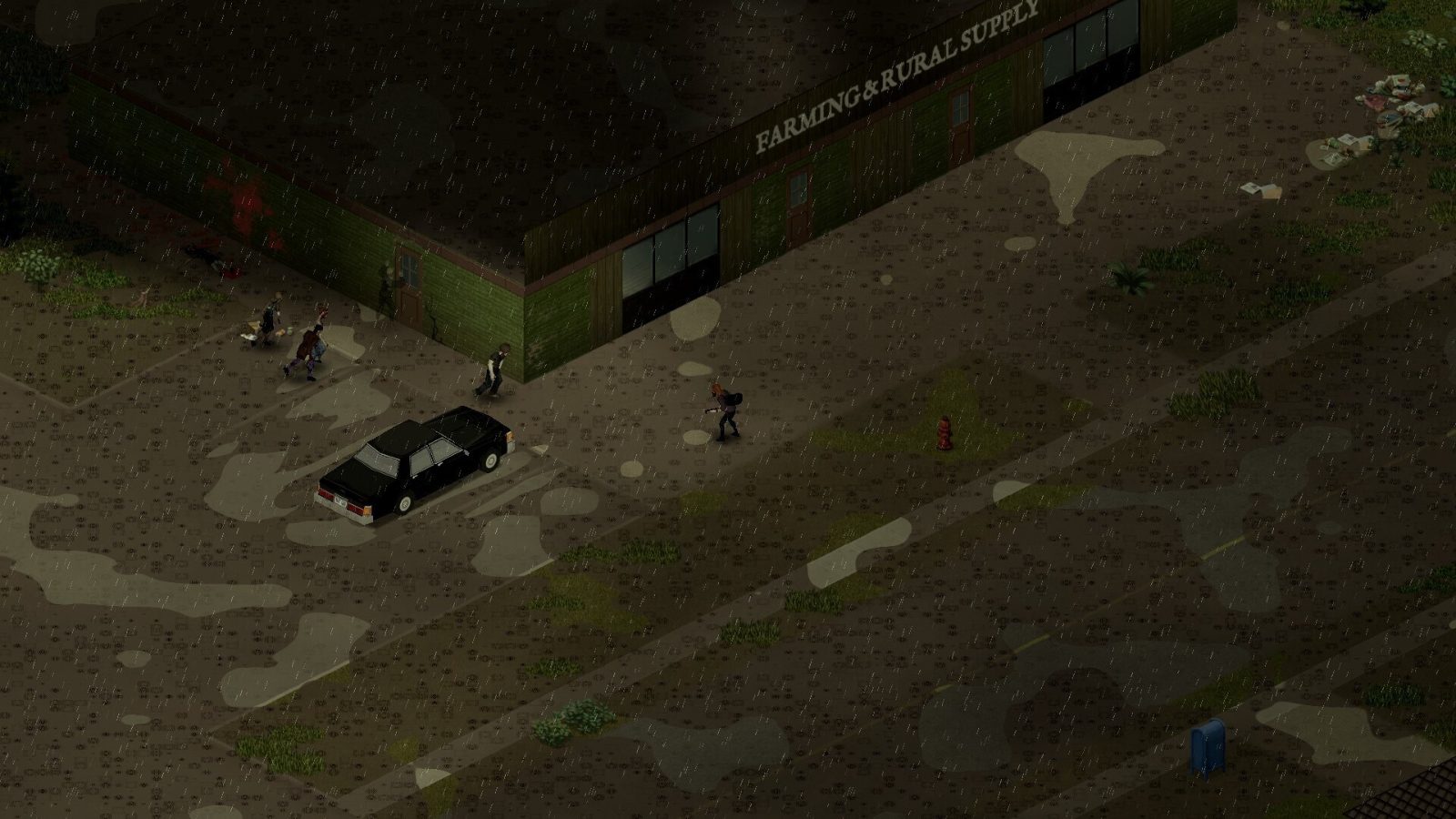
An overgrown lot in Project Zomboid
A campfire by the water at the forest edge is the heart of a wilderness camp.
01Part

Choosing a spot

A wilderness camp needs three things within a short walk: open water, forest, and ground that is not a town. Rivers and lakes never run dry, and forest zones give the densest foraging and the best trap odds.

ZoneGood forWeak for
Deep forest, forestMost forage finds per area (about 8 to 10), berries, mushrooms, rabbits and squirrels in trapsStones are a small share of finds
Vegetation (scrub, meadow)Stones and flint, vegetables, birds in stick trapsFewer berries and mushrooms
FarmlandFruit and vegetables, room for cropsNo rabbits, squirrels or raccoons in traps (one source)
Roadside and dirtHighest share of stone findsLittle food, more zombies
TownLootVery poor trap odds for small game

Opinion Camp where forest meets scrub beside a river or lake, and walk to a road verge when you need flint. Fallas Lake is worth a look: one map study places the only fixed flint and limestone boulders there, three flint and four limestone (one source).

02Part

The first days: flake, axe, fire, shelter

Build 42 replaced the old chipped stone with a knapping chain. The order below needs no looted tools.

  1. Forage stones. The Stones focus in Search Mode works at Foraging 0 and turns up Stone, Flint Nodules and Sharp Flint Flakes all year. Snow cuts the rate.
  2. Knap a flake. One Flint Nodule struck with a plain Stone gives a Sharp Flint Flake. There is no skill gate and the recipe is known from the start. The flake counts as a sharp knife in recipes that ask for one (one source), so it is your first knife.
  3. Make a Crude Stone Axe. A flake, a tree branch and two bindings (ripped clothing or twine) at Maintenance 1.
  4. Build a campfire. It is placed from the Building menu and costs three stones. Feed it twigs, branches and logs. See fire.
  5. Sort out a bed. The improvised tent kit takes a tarp, four tent pegs, two rods or branches and a long stick (one source). The tarp is loot, so pack one or sleep rough until you can build in logs.

A proper Stone Blade needs Knapping 1 and a learned recipe, and the large stone axe head needs Knapping 4 and a Large Smooth Flat Stone (one source). Lighting a fire without a lighter or matches uses a notched plank and a sturdy stick. The sources here do not give its skill needs, so carry a lighter.

03Part

Water and food without taps

River, lake and rain water are all tainted in Build 42 and can make you sick. Boil it in metal cookware on a lit campfire until the warning on the container goes away. None of the sources checked say a fired clay vessel can boil water, so treat one metal pot as essential. More on the water page.

SourceWhat it needsNotes for Build 42
ForagingSearch Mode, daylight, no rushBerries, mushrooms and insects from level 0. Berries and mushrooms unlock as a search focus at 3. Vegetables such as potato, cabbage and carrot are listed from level 2 (one source). Many berries and mushrooms can be poisonous.
FishingRod: wooden rod, 2 twine or line, a hook, a sharp knifeRecipe comes at Fishing 4 or Carving 4 (one source). Hooks are a nail, a paperclip or a bone hook. Spear fishing was removed in Build 42 (one source). Worms from foraging are bait.
TrappingA known trap recipe, fresh baitStick trap (4 sticks, 1 twine) catches birds on foraged insects. Rabbits, squirrels and raccoons are only caught between 19:00 and 05:00.
HuntingTracking, a weapon, a knifeDeer, rabbits and raccoons are wild. Guides describe deer hunting with firearms only. Rabbits can be grabbed by hand.

A trap only rolls for a catch while its square is unloaded, which means being about 80 tiles away. Guides disagree on the snare: one lists Trapping 1 to craft it, another gives level 6 as the point it is learned without a magazine. Every kill is worth butchering for meat, hide, bones and sinew.

04Part

Primitive crafting chains in outline

Each chain starts from something you can pick up, then hits a gate. Most gates are a magazine or a metal tool.

ChainStartLeads toFirst gate
StoneFlint Nodule, StoneFlake, awl, blade, chisel, flint saw, axe and maul headsRecipes above the flake must be learned, by magazine, trait or leveling Knapping
Bone and woodCarving with a sharp toolHandles, stakes, spears, tent pegs, knapping tool (antler), bone fishing hookBone hook is taught by the Cultures of Prehistory magazine (one source)
FiberDogbane, a stick, a sharp knifeTwine, 5 uses per spool (one source)Finding dogbane. Sinew thread also works
ClayClay patch, shovel, empty sackPrimitive kiln (20 clay and a trowel), bricks, pots, crucibles (one source)The shovel, and a real fire starter. A notched plank does not light a kiln (one source)
CharcoalLogs or large branches12 wood charcoal from 2 logs (one source)The charcoal pit recipe comes from the Iron Age Blacksmithing magazine (one source)
HideButchered animalBrain-tanned leather, hide clothingSoftening beam and tanning bucket each take 2 planks and 2 nails (one source)

The full recipes are on the pottery and blacksmithing pages.

05Part

Clothing, winter, crops and animals

Winter is the real test. Snow reduces forage finds, most plants are out of season, and only a few berries (beauty berry, winter berry) are listed for the cold months (one source). Stock dried and cooked food, firewood and a walled, roofed room with a heat source before the first snow. See the winter guide.

For clothing, the wild route is hides: flesh them on a softening beam, soak each in a bowl of brain tan (one animal brain and 300 mL of water), then dry them (one source). The sources checked give no insulation figures for hide clothing, so keep and patch what you spawn in and use tailoring to maintain it.

Farming needs a trowel, shovel or hoe to dig furrows (one source), plus seed. A crop left to its seed-bearing stage gives seed for the next round. No source checked confirms that a foraged wild vegetable can be turned into seed, so do not plan around it. With growing seasons on, which is the Apocalypse default, sowing outside a crop's months curses the plant, and winter has almost no good months (one source). Livestock is a farm feature, not a forest one, so cows, sheep, pigs and chickens mean a trip to settled land.

06Part

Skills to level first and the realistic limits

Level in this order: Foraging (wider search radius and more categories), Maintenance to 1 (crude axe), Knapping, Carving to 4 (fishing rod), Trapping, then Fishing and Tracking. Character creation matters more than any of that. Park Ranger starts with Knapping and Trapping at 1, knows all five trap recipes and has the largest foraging vision bonus. The Bushcrafter trait gives +1 Foraging, Knapping, Maintenance and Carving for 8 points and teaches the knapping recipes (one source). Compare options on traits and occupations.

A pure no-town run is possible only in a narrow sense. Expect to need these from buildings or cars:

  • A metal pot for boiling water, and a lighter or matches.
  • A shovel or trowel for clay and furrows.
  • Magazines for the charcoal pit, the bone hook and most trap and knapping recipes, unless your occupation knows them.
  • A tarp, nails and a saw for the tent, tanning gear and snares.
  • Seed packets and medical supplies.

Opinion Plan one quiet raid on a farmhouse or roadside cabin in the first week for a pot, a lighter, a shovel and a saw, then leave towns alone.

07Part

Quick answers

Can you survive in Project Zomboid without looting towns?

Mostly. Flint tools, a campfire, foraged food and bird traps need no loot, but boiling water needs a metal pot and several key recipes come from magazines. One small raid for a pot, a lighter and a shovel makes the run practical.

How do you make a stone knife in Build 42?

Forage a Flint Nodule and strike it with a Stone to knap a Sharp Flint Flake, which works as a basic sharp knife. The Stone Blade is a learned recipe that needs Knapping 1.

How do you make a stone axe in Build 42?

The Crude Stone Axe takes a Sharp Flint Flake, a tree branch and two bindings at Maintenance 1. The better large stone axe head needs Knapping 4 and a Large Smooth Flat Stone.

Is river water safe to drink in Project Zomboid?

No. River, lake and rain water are tainted in Build 42 and can make you sick. Boil it in metal cookware on a campfire or stove until the tainted warning disappears.

Why do my traps never catch anything?

A trap only rolls for a catch while its square is unloaded, which means being roughly 80 tiles away. Rabbits, squirrels and raccoons are also only caught between 19:00 and 05:00, and town zones have very low odds.

What is the best occupation for a wilderness start?

Park Ranger is the usual pick. It starts with Knapping and Trapping at level 1, knows all five trap recipes and has the largest foraging vision bonus.

Figures come from fan guides checked against builds 42.19 to 42.21, not from a 42.22 play test. Recipe levels and magazine gates marked (one source) are the least certain. Sources: PZFans: Build 42 knapping · Pindrop: stone, flint, clay and ore · PZFans: trapping guide · Build42Guide: hunting and tracking · ProjectZomboid.wiki: campfire. Your game is the final word: if it disagrees with us, tell us and we will fix the page.