Latest
Oct 27 · 42.22 pre-release: ladders and crowbar break-insOct 23 · First-person mods are not officially supportedOct 21 · The Indie Stone on Java mods: download responsiblySep 28 · Build 42.21 Stable: zombie duplication fixesAug 26 · Security fixes on every branchAug 17 · Servers now handle up to 254 playersJul 29 · Build 42 goes Stable

Ranching and livestock in Project Zomboid

Build 42 lets you keep cows, sheep, pigs, chickens and turkeys. This guide covers finding animals, building a pen and zone, feeding and watering, keeping stress low, breeding, milking, eggs, wool and slaughter. It also covers illness and what zombies do near the pen. Written for Build 42 (42.22), November 2026.

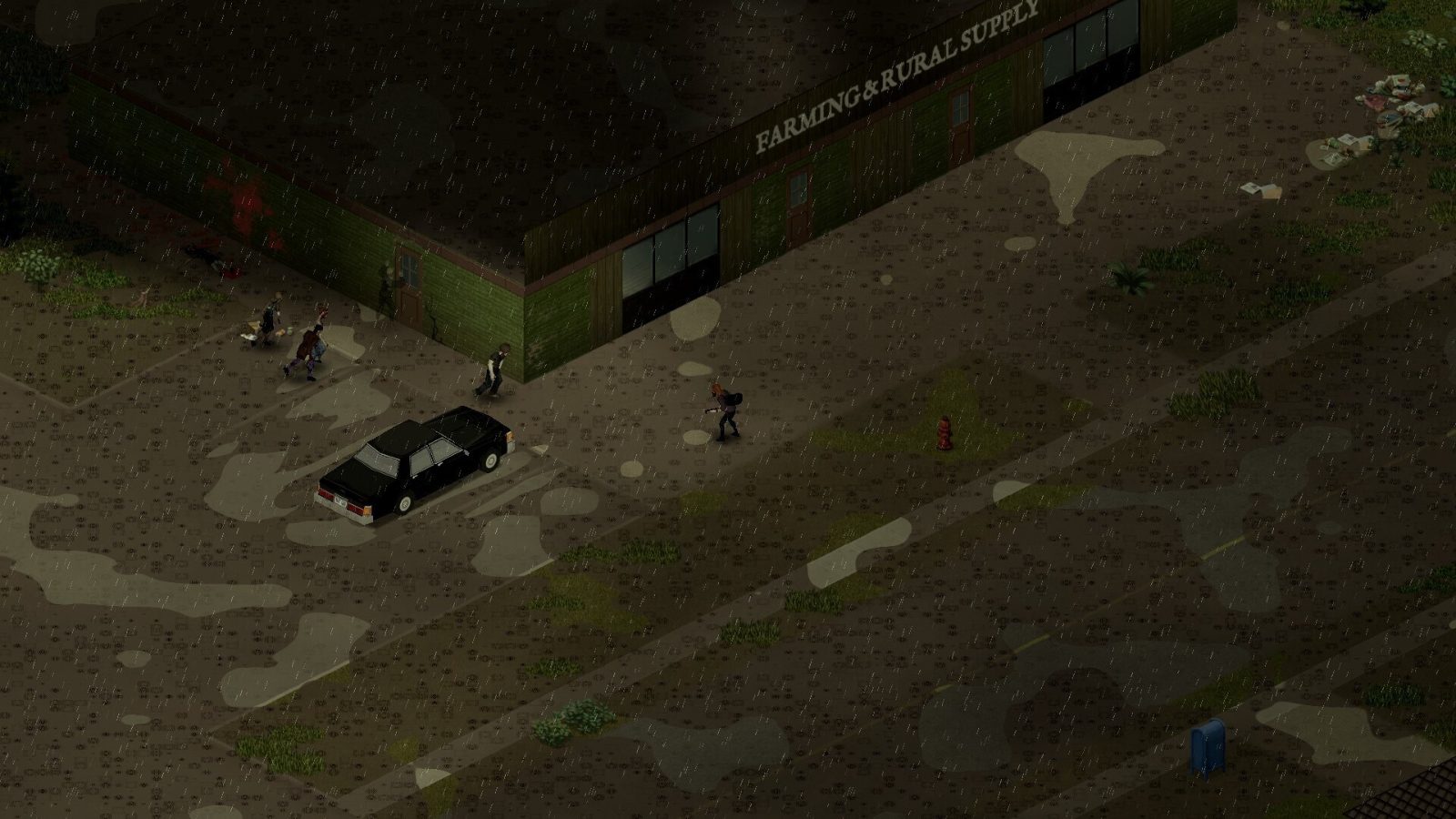
An overgrown lot in Project Zomboid
A fenced livestock zone with troughs and a chicken hutch.
01Part

Which farm animals you can keep

Build 42 added real livestock to Project Zomboid. Build 41 had no farm animals, so ranching advice is Build 42 only. The domestic species are cows, sheep, pigs, chickens and turkeys. Rabbits, rats, mice and raccoons can also be kept inside a livestock zone, but in vanilla they come from the wild and have no hutch of their own. Deer do not tolerate captivity and are a hunting target instead. For a profile of every species, see the animals page; this page is about running the farm.

AnimalBreedsProductsAdult needs
Cow / bullAngus (meat), Holstein (milk), Simmental (between)Milk, beef, large hidePen of 80 tiles, food and water troughs
SheepEast Friesian, Rambouillet, SuffolkWool, milk, mutton, hidePen of 40 tiles, shears for wool
PigAmerican Landrace, Large BlackPork, hidePen of 40 tiles, no hutch exists
ChickenLeghorn, Rhode Island RedEggs, meat, feathersPen of 40 tiles plus a hutch
TurkeyOne typeEggs, meat, feathersPen of 40 tiles plus a turkey hutch
RabbitOne type (wild)Meat, small hideNo minimum size defined

The two chicken breeds are cosmetic. Holsteins give more milk and less meat than Angus.

02Part

Getting your first animals

There is no trader or shop, so buying animals is not a thing. You find them. Livestock spawns on rural farms, barns and fenced fields outside the towns, and the sandbox option for ranch spawn chance controls how often a farm has animals. Pick a base location near farmland.

  • Lead on a rope. Stand next to a cow, sheep or pig, open its menu and attach a rope to walk it home.
  • Carry small animals. Chickens, rabbits and other small stock can be picked up and carried in your arms.
  • Use a livestock trailer for long trips or several animals. See towing.
  • Trap wild ones. Rabbits come from trapping rather than farms.

Timing matters. Animals in areas you have not visited do not age or starve while unloaded, but farm animals in newly generated areas start spawning as corpses after roughly 6 to 12 months (one source).

03Part

Pens, zones, hutches and troughs

Animals stay where you tell them through a designated livestock zone, not through fences alone. Open the Designated Zones tool (the sheep icon at the top left), choose Add, drag over the pen and confirm. Put the troughs, shelter and hutch inside it. Fences are optional but stop strays and help defense.

Animal stageMinimum zone size
Cow or bull80 tiles
Adult sheep, pig, chicken, turkey, raccoon40 tiles
Calf40 tiles
Chick, lamb, piglet, poult, rat, mouse20 tiles

An undersized zone cuts daily weight gain to one eighth, so build bigger than the minimum. Add a roofed section, because rain stresses animals standing in the open. Chickens need a hutch: it holds the egg boxes and protects the birds from the nighttime predator event. One source gives the chicken hutch recipe as Carpentry 4, 18 planks and 30 nails, holding up to 20 birds (one source).

Troughs can be built at Carpentry 1 or found on farms. A trough holds food or water, never both, so empty one completely before switching it. An empty trough with no roof over it fills with rain. Sources disagree on other water: one says animals drink from puddles and open water tiles, another says they only drink from troughs. Opinion keep a filled water trough in every pen and do not rely on puddles. See water.

04Part

Food, water, stress and the Animal Care skill

Grazers eat grass straight off the tile, and grazed grass regrows over time (the sandbox regrow setting is in hours). A scythe cuts a 3 by 3 patch for hay. Troughs accept hay, animal feed, vegetables, fruit and unrotten human food. When hunger or thirst passes 80 percent the animal becomes stressed, and an empty bar drains health until it dies.

Stress is the main thing to manage. It rises from rain on an unroofed animal, hunger or thirst, zombies nearby, gunshots, shouting and running footsteps, being moved in a vehicle above 5 km/h, chickens left outside a hutch at night, and slaughter in view of the herd. Stress falls with calm time in the zone, holding the animal, and petting it when its cooldown allows. Above 80 stress, males and large animals can turn on the player, break doors and even climb stairs.

The Animal Care skill (internally Husbandry) improves what the inspection panel shows, raises yields and lowers the chance an animal breaks away while you milk or shear it. At level 8 you can milk an animal regardless of its stress. You earn XP by milking, shearing, watering, petting and collecting eggs. The Rancher occupation starts at level 4 and Farmer at level 1 (see occupations). Five Animal Care books carry the XP multiplier from level 1 to 10; check the skill books page.

05Part

Breeding, milk, eggs and wool

Breeding needs an adult male and an adult female of the same species in the same zone, in breeding season (a sandbox toggle), and both must pass a fertility check. One cockerel can serve several hens. Keep only one adult male per species per zone, because males fight in season and hurt each other. Inbreeding can bring out recessive disorders such as skinny, which divides base weight by three. Opinion bring in an unrelated bull or ram every few generations. No source gave a pregnancy length in days; it scales with the Animal Pregnancy Time setting in sandbox settings. Calves and lambs mature at 180 days, chicks and poults at 126 days, piglets at 140 days (one source).

Milk starts once a cow or ewe is pregnant. Use the Milk Animal option with a bucket, pot or similar container in your inventory. Regular milking raises capacity; a neglected udder dries up, and one held at 85 percent or more hurts the animal. Keep calves in their mother's zone so they can nurse. One source says a lactating cow can be milked about every 2 days (one source). Rabbit does nurse their kits but cannot be milked.

Eggs are laid in hutch egg boxes, or on the ground if no box is free. Fertilized eggs are heavier and hatch into chicks even if moved out of the zone. Wool comes from shearing sheep with shears or electric shears; one source puts the regrowth at 5 to 7 days (one source). Spin it at a spinning wheel for tailoring thread and yarn.

06Part

Slaughter, illness, death and zombies

To slaughter, kill the animal first, then butcher the carcass. Small animals you are holding can be killed from your inventory; large stock is killed and then processed. Butcher on the ground, not from inventory, which has been buggy. A sharp knife is required. The butcher hook (crafted from a large hook, a plank and nails) gives better yield and keeps the hide of cows and bulls, which is otherwise lost. A chicken gives one carcass, a head, two feet and 70 to 80 feathers. Full steps are on the butchering and leather pages.

The humane way is the calm way: Opinion lead the animal well away from the pen, out of sight of the herd, and do it quickly. Slaughter in view of other animals spikes their stress and scatters them. Do not cull pregnant females if you want the herd to grow.

Illness mostly comes from a dirty hutch: chickens sicken and can die unless you clean it with water and a stain-cleaning item. Starvation and thirst kill directly. Cows die of old age around day 4,320 and sheep around day 3,600.

Zombies do not attack animals. They are still a problem: their presence stresses the herd, and animal sounds attract zombies by default. A horde at the fence means a stressed, unproductive herd, so wall the farm off and clear the area often. See zombies.

07Part

Quick answers

Can you buy animals in Project Zomboid?

No. There are no traders, so you find livestock on rural farms and lead it home on a rope, carry small animals, or use a livestock trailer.

Do zombies attack farm animals in Build 42?

No, zombies do not attack animals. Their presence still stresses the herd, and animal noise attracts zombies by default.

Why can't I milk my cow?

A cow or ewe only gives milk after she is pregnant, so you need a bull or ram in the same zone. You also need an empty bucket, pot or similar container in your inventory.

How big does an animal pen need to be?

The minimum zone is 80 tiles for a cow, 40 for adult sheep, pigs, chickens and turkeys, and 20 for most babies. Smaller zones cut daily weight gain to one eighth.

Do I need a butcher hook to slaughter animals?

Small animals can be butchered without one, but the hook gives better yield, and cows and bulls lose their hide if you butcher them without it.

Why are my chickens getting sick?

A dirty hutch makes chickens sick and can kill them. Clean it with water and a stain-cleaning item.

Pen sizes, stress causes, breeds and skill facts agree across two or more Build 42 guides. Production intervals, growth days and hutch costs come from a single source each and are marked; pregnancy length could not be found in days. Sources: SlashSkill animal husbandry guide · Build 42 Guide: animals · Pindrop: Animal Care skill · The Indie Stone blog, April 2024 · Supercraft livestock server guide. Your game is the final word: if it disagrees with us, tell us and we will fix the page.